Posted by:- Sushant Mishra
13-07-2024
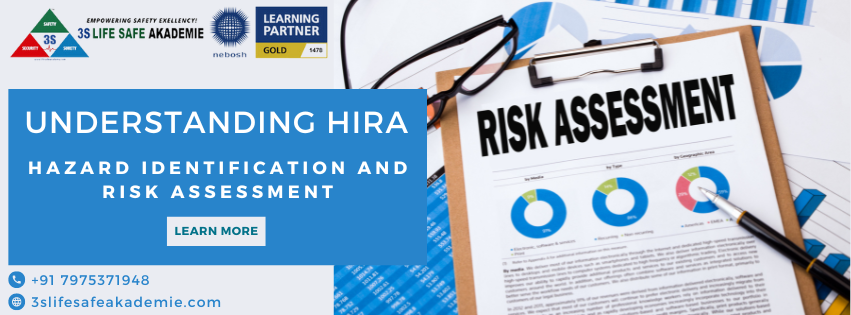
Hazards are everywhere, whether you're driving your car, cooking in the kitchen, or working in a factory. But how do we identify these hazards and assess the risks they pose? That's where HIRA, or Hazard Identification and Risk Assessment, comes into play. In this article, we'll explore what HIRA is, why it's important, and how it's applied in various settings.
Imagine walking through a forest. To stay safe, you need to identify potential dangers like slippery rocks, wild animals, or sudden drops. This is a simple analogy for HIRA, which stands for Hazard Identification and Risk Assessment. It's a systematic process used to identify potential hazards in the workplace and evaluate the risks associated with them. This helps in preventing accidents and ensuring a safer environment for everyone.
The full form of HIRA is Hazard Identification and Risk Assessment. In workplace safety, HIRA is a systematic process used to identify hazards, evaluate their likelihood and severity, and determine suitable control measures. It helps organizations prevent accidents and maintain a safer workplace.
| Letter | Full form | Meaning |
|---|---|---|
| H | Hazard | A source or situation capable of causing harm |
| I | Identification | Finding and documenting workplace hazards |
| R | Risk | The combination of likelihood and severity |
| A | Assessment | Evaluating risk and deciding its priority |
Example: An employee working on a wet factory floor could slip and suffer an injury. The wet floor is the hazard. The likelihood and possible severity determine the risk rating. Controls may include removing the water, repairing the leak, restricting access and displaying warning signs.
Risk score = Likelihood × Severity
Why should we care about HIRA? Well, imagine a world without it. Workers would be exposed to all sorts of dangers, leading to frequent accidents and injuries. HIRA is crucial because it helps in:
To understand HIRA better, let's break it down into its key components:
Conducting HIRA involves several steps, each critical to ensuring a thorough and effective assessment. Here's a detailed look:
Hazard identification is the first step. This involves recognizing all potential sources of harm. Hazards can be physical, chemical, biological, ergonomic, or psychosocial.
Once hazards are identified, the next step is risk assessment. This involves analyzing the likelihood of the hazard causing harm and the severity of the potential consequences.
The final step is risk control. This involves implementing measures to reduce or eliminate risks. These measures can be engineering controls, administrative controls, or personal protective equipment.
HIRA is not a one-size-fits-all approach. Different industries have unique hazards and risks. Let's look at how HIRA is applied in a few sectors:
In construction, hazards might include falling from heights, being struck by objects, or machinery accidents. HIRA helps in identifying these risks and implementing safety measures like harnesses, helmets, and safety protocols.
Healthcare workers face biological hazards like exposure to infectious diseases. HIRA in healthcare involves ensuring proper sanitation, use of personal protective equipment, and safe handling of medical waste.
Manufacturing industries deal with chemical hazards, machinery risks, and ergonomic issues. HIRA helps in assessing these risks and implementing controls like proper machine guarding, ventilation systems, and ergonomic workstations.
Employees play a vital role in the success of HIRA. They are often the first to notice potential hazards and can provide valuable insights into risks that may not be immediately apparent to management. Encouraging a culture of safety where employees feel comfortable reporting hazards is crucial.
The benefits of HIRA are extensive:
Despite its benefits, implementing HIRA can be challenging. Some common challenges include:
To overcome challenges and ensure effective HIRA, consider these best practices:
The future of HIRA looks promising with advancements in technology. Innovations like AI and IoT can provide real-time data on hazards and risks, making assessments more accurate and timelier. The integration of these technologies will revolutionize the way we conduct HIRA, making workplaces even safer.
HIRA is an essential process for maintaining a safe and productive work environment. By systematically identifying hazards, assessing risks, and implementing controls, we can prevent accidents and ensure the well-being of everyone involved. While there are challenges in implementing HIRA, the benefits far outweigh them, making it a critical component of workplace safety.
The full form of HIRA is Hazard Identification and Risk Assessment.
The three main steps are: 1. Hazard Identification, 2. Risk Assessment, and 3. Risk Control.
HIRA is required to prevent accidents, comply with legal safety regulations, and protect the health and well being of employees.
While safety officers usually lead the process, it is a collaborative effort involving management and employees who work directly with the hazards.